Retirees are authorized to register one vehicle for base access as a non-sofa status individual (without ETP). However, retirees are required to first register the car downtown on the economy, which includes paying tax on vehicles. So, you register your vehicle downtown, then request base access and a bardcode sticker from Pass&ID offices. More info on this follows below, and your local Pass&ID office (DBIDS) has all the details.
A Non-SOFA status retiree cannot purchase vehicles from the Exchange's Military Car Sales (MCS) on base. The price of cars on the Korean economy, however both new or used, are reasonable, and there are many to choose from to include Korean, American and European made cars. A non-Korean car will be more expensive because of the import tax added. And there is an annual registration tax, which is typically roughly $500 a year or so, but it varies. Just be prepared for an annual registration expense.
Korean government approved Safety Inspections are required every two years, unless it is a brand new vehicle purchased from a dealer or the on-base Military Auto Sales, which then does not require a safety inspection for the first two years. There are two types of Safety Inspection processes that affect expats in Korea: Non-SOFA and SOFA.
Non-SOFA
Non-SOFA vehicles such as what non-working retirees have, are registered and inspected downtown off-base. The Korean DMV offices do not accept on-base issued Safety Inspection, so you need to get a Korean Safety Inspection. Once registered downtown on the Korean economy you can then go to Pass&ID on-base to obtain a base sticker for base access.
SOFA
SOFA vehicle owners must have their Safety Inspections done on-base ONLY. The current on-base locations that perform authorized safety inspections are:
- Oasis Auto, Osan AB
- Oasis Auto, USAG Humphreys
- Auto Hobby Shop, USAG Humphreys
- Oasis Auto, Kunsan AB
- Camp Casey
The Pass&ID offices WILL NOT accept a Safety Inspection accomplished from a downtown Korean shop for a SOFA vehicle. For those SOFA members working in the Seoul area (Yongsan, K-16, etc) you must have your inspections done at one of the above listed locations.
Car insurance in Korea can be more expensive than in the U.S. depending on the type and make of vehicle. While there are several available, there are not as many insurance companies like in the U.S., but honestly I don't hear too many folks complain about insurance costs, so it really isn't that different. The insurance companies also have discounts based on if you have a black box (dash cam), drive less than xxx miles a year, etc. So shop around. You will also pay Korea Road Tax during registration, with the amount varying based on the size of the engine.
Helpful Links
Learn more on our Transportation Around Korea page.
SUGGESTED AUTO PURCHASE LOCATIONS (not an endorsement, just suggestions)
- Military Auto Source (MAS) https://militaryautosource.com/
- Gorilla Motors (Humphreys, Casey, K-16, Osan, Kunsan, Walker) https://www.facebook.com/groups/gorillamotors/
- CarMax Center Humphreys http://www.carmaxcenter.com
As previously stated USFK authorizes retirees to obtain a vehicle decal for base access. The vehicle must be in the sponsors name - the retiree, not the dependent spouse. USFK Regulation 190-1 covers Non-SOFA vehicle registration. Click here to go to our Base Access page with a link to USFKR 190-1.
SOFA to Non-SOFA
If you retire from a SOFA status job in Korea with a SOFA registered vehicle and wish to keep the vehicle, you must have it inspected at Incheon, pass that inspection, and pay the tax on the vehicle from the time it was brought into Korea. It can be very expensive. Once you pass this inspection, and pay the tax, you still have to get it inspected at your local Korea Inspection Station before going to the local Korean DMV to register it.
Base Decal Requirements for Non-SOFA Vehicles (Retirees & 100% DAV)
A retiree or 100% Disabled American Veteran living in Korea with a Korean registered vehicle can go to a Pass&ID office to obtain a base decal (barcode sticker) for base access for one (1) vehicle without an Exception To Policy (ETP). There is no requirement during this process to show or have the downtown Vehicle Safety Inspection certificate. The only requirements for a retiree to obtain a base decal (barcode sticker) are:
- Korean Vehicle Registration document
- Retiree ID Card
- Proof of Insurance
- Fill out a Pass&ID Request Form 195 to Register ( see below)
To initiate the vehicle registration process for a base decal, you must first visit the Visitor Center and inform them you are on your way to register the vehicle on base. You need your Korean DMV paperwork. They will give you a one-day pass FOR THAT SPECIFIC PURPOSE. An individual is not authorized to Escort their own vehicle on base, except for this purpose.
If you purchase a vehicle from another retiree the seller must de-register the vehicle and then do a transfer to the buyer. The buyer pays for registration fee, taxes, etc. HINT: it may not always be the best move to keep your previously SOFA status vehicle. Purchasing a vehicle after you retire could save money.
Pass&ID Form 195 Process for a base decal:
Usually takes a few days. You can then go in and update your USFK registration. When the form 195 comes back it will have sections 3 and 4 completed by garrison.
U.S. spec cars that were brought to Korea via SOFA agreement do not have Korean Import taxes levied on them. So, if you wish to purchase and register such a vehicle under non-SOFA status, you must first "import" the car, which will require Korea inspection, import and custom fees, and then Korean taxes and registration fees. It can take a month or more to go through all this.
The following IS NOT an endorsement, just an example of a company someone has used to do all this - HB Motor Sports, cell phone 010-8703-0933, land line phone 031-905-0937 (phone numbers are from about 2014, so may have changed). Company's such as this will do all the work, you just have to pay; As an example several years ago, payment to this company to process a 2003 Ford Explorer that was imported into Korea in 2013 was about 1.2 million won, which allowed HB Motor Sports to the vehicle through all the import inspections. The import fees themselves were then another 1.4 million won, which at the time was 35% of the vehicles current value. Then to get the vehicle plated was another 300,000 won.
Bottom line: A U.S. car brought to Korea under SOFA is not cheap to take out of SOFA and register on the Korean economy. However, a Korean purchased vehicle, not SOFA registered, is pretty simple at DMV.
The streets are pretty much just an extension of parking lots, typically with parked cars on both sides. A 2-lane road in a housing area will usually be just a single, or narrower, lane because cares are parked on each side. Drivers must pull over and navigate around each other as they approach each other coming from opposite directions.
Most apartments do not have designated parking, although it is becoming a more common trend to have them. Apartment parking lots are often overcrowded. Almost all cars in Korea now have the owners cell phone number in the windshield. So, if you are blocked in, you call them. The old days of blowing your horn until someone comes out is long gone. As are the days of everyone leaving their manual transmissions (there are none now) in neural and moving the cars around yourself!
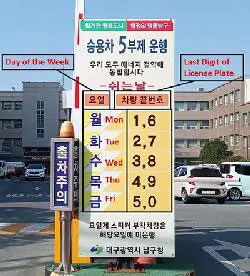
Parking at South Korean government buildings (such as Seoul City Hall, district offices, or immigration centers) is strictly regulated by license plate rotation rules, limited visitor spaces, and digital payment systems. The day of the week plus the last digit of your license plate number determines when you are allowed to park. Entry is often restricted based on the final digit of your vehicle's license plate matching the calendar day's corresponding number (e.g., plates ending in 1 or 6 are barred on Mondays, 2 or 7 on Tuesdays, etc.). There are also restrictions based on height of the vehicle and there are usually fees for parking. Here is an example using Seoul City Hall https://english.seoul.go.kr/city-hall/directions/1-seoul-city-hall-main-building-2/
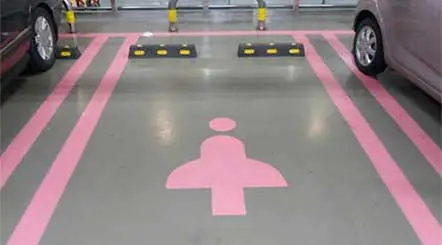
Established to make women feel safer, women’s parking spaces can be found nationwide. These spots are usually in an area under closed-circuit surveillance and are wider and longer, allowing women with children and strollers to have enough space to get out of their vehicles. You’ll recognize these as they tend to have hot pink outlines and are marked with the standard woman symbol.
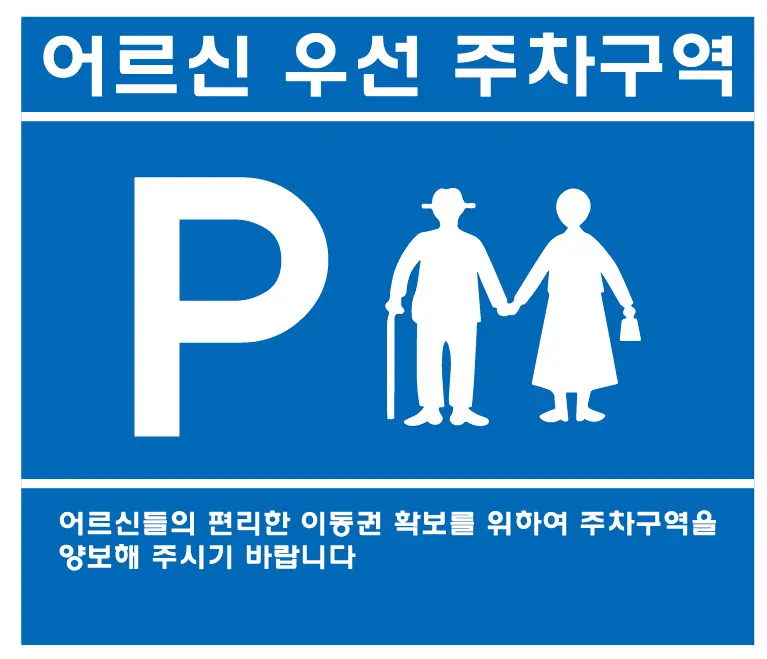
South Korea has designated priority parking spaces for seniors (often labeled as elderly priority spaces or included under family-friendly/mobility-disadvantaged zones), though rules and enforcement differ from legally protected handicapped stalls. These spaces marked in yellow are for elderly drivers, especially those who have mobility difficulties. These spots, while necessary, are not easy to distinguish from other parking spaces, as they may or may not be marked with ‘어르신 우선 주차 구역’ meaning “elderly parking space.” Signs with an elderly person logo are most common to see now vs a painted parking spot.
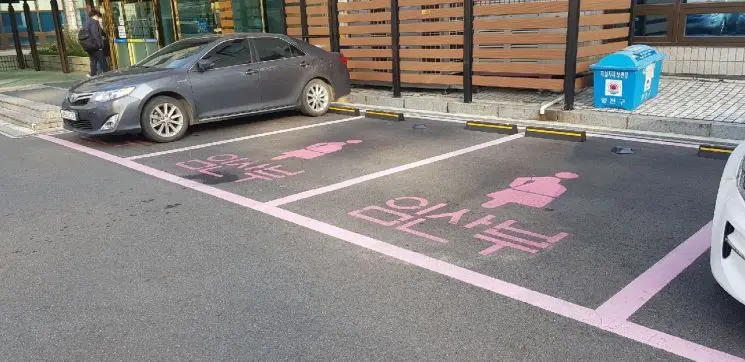
South Korea has designated wider parking spaces intended for pregnant women and families, though availability depends heavily on local municipal ordinances and specific public or private lots This type of space is increasing in many government office parking lots around South Korea. Like a women’s priority parking lot, these parking spaces are wider than regular parking lots and are bordered with hot pink outlines and marked the pregnant woman logo.
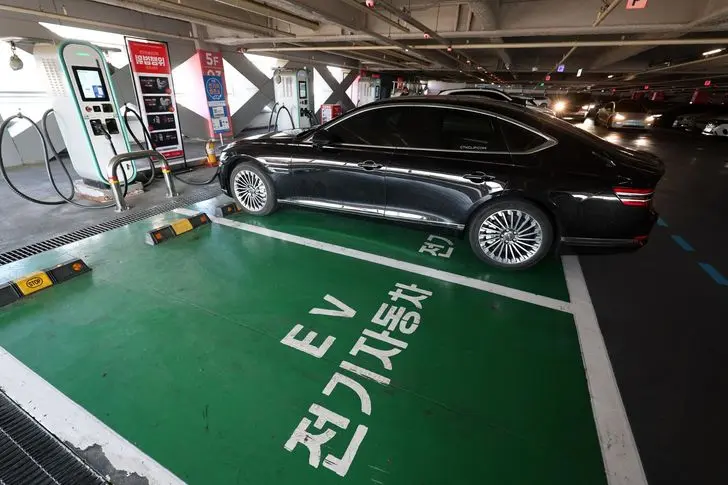
South Korea has widely designated parking spaces and charging zones for electric vehicles (EVs) mandated by the Eco-Friendly Vehicle Act. Public buildings, large apartment complexes, and commercial parking facilities are legally required to reserve a set percentage of their parking capacity for eco-friendly vehicles and chargers. Designated EV spots require green lines or floor markings, and non-EV vehicles parking in them—or EVs overstaying time limits—face standard fines of 100,000 KRW or more, with rising resident conflicts regarding underground safety.
To obtain an on-base Handicap Parking Decal visit the Pass&ID office where your vehicle is registered. Pass&ID will need a signed letter/memo from a base hospital doctor. The decal is like the small blue handicap parking decal below and must be affixed to the inside of your vehicles windshield. It is not vehicle transferable. It is only authorized as a handicap decal on-base. Korean Handicapped Placards are issued by Korea DMV.
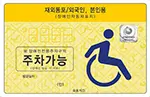
This is an example of a Korea issued handicap parking permit. There are different variations. The Korean Handicap Parking Placard will expire on the same date as your Korean Registration Card. To renew your handicap parking placard at expiration, you will need to resubmit all the required paperwork again with your updated Korean Registration Card.
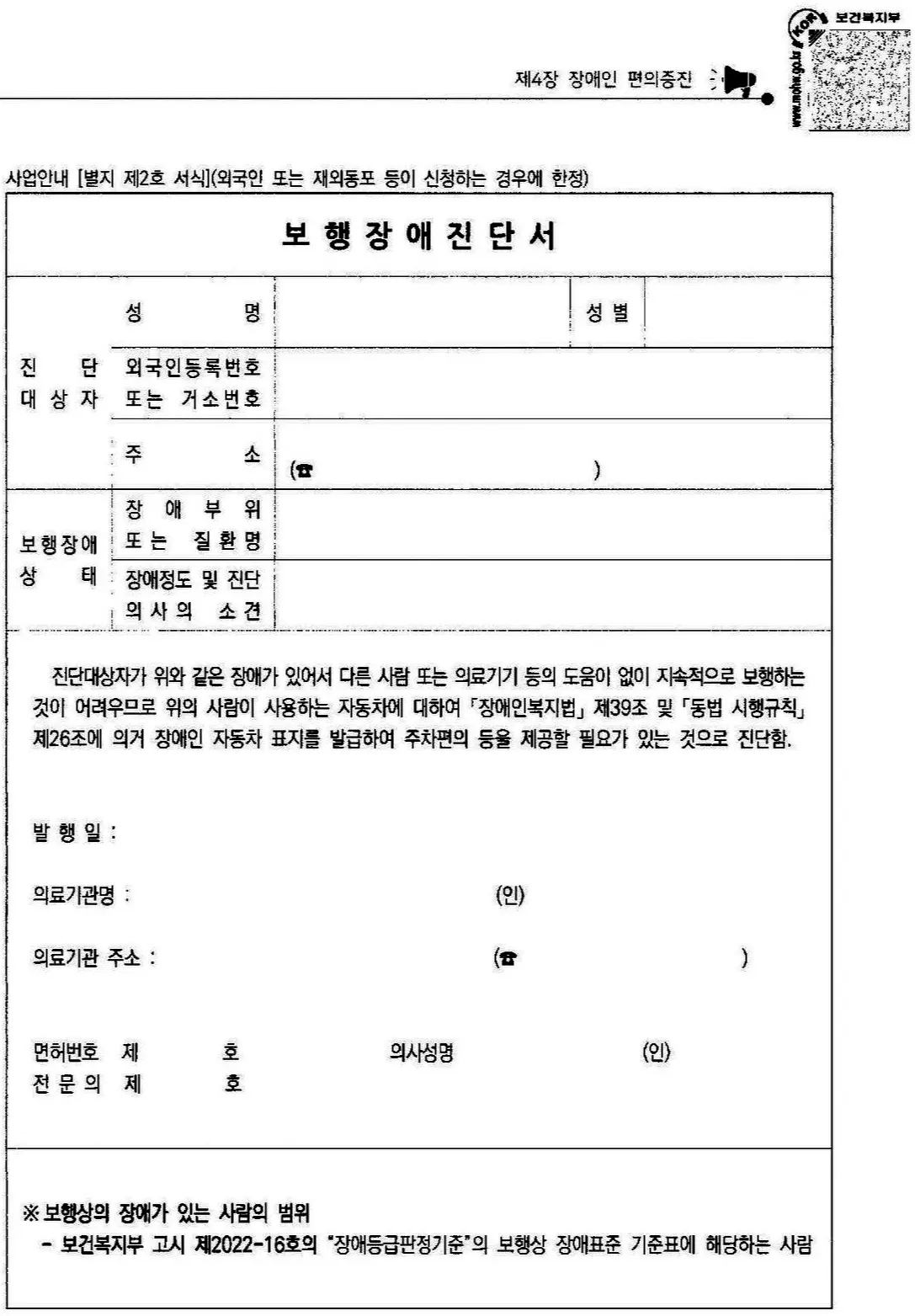
Here is the form for your doctor to complete to get a handicap parking placard from the Korean Government. It will need to be completed in Korean. Once completed by your doctor take the form, your Korean driver’s license, Korean Registration Card, and Korean vehicle registration to your local Gu Office. There will be another form to complete at the office. They may ask for additional documents.
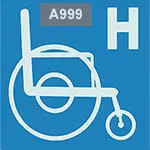
This is similar to the blue handicap parking decal issued by USFK vehicle registration offices you receive on base/post. It has no expiration date, BUT is only good on USFK installations, not downtown in Korea. The Korean Handicap Parking Placard has an expiration date and is good both off and on post.
It is allowed to have both on your vehicle at the same time.