You can get almost anywhere on the Korean Peninsula with minimal effort and for a very reasonable price via public or private transportation and free between USFK military bases where available. South Korea’s mass transit system is a nearly seamless combination of planes, trains, buses and taxis. Using these you will not have to worry about parking or security and safety of your POV.
Seoul is the central hub for domestic and international travel. As for US military base shuttles, they are not as robust as they used to be pre-covid pandemic, but there are still busses and shuttles around. When it comes to International travel, keep in mind the fact you are in a foreign land makes any travel off the ROK International, so be prepared! Visit our Passport and Immigration & Visa pages for more.
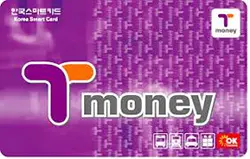
The Korean T-Money Card is a prepaid transportation card that can be used to pay for public transportation in cities across Korea, including buses and subways. It provides cash-free travel around Korean cities, takes the hassle out of getting around Korea and buying tickets for each journey, as well as offering discounts in many places.
The T-Money Card can also be used to pay for a range of other items and services, including taxi charges, items in convenience stores, entrance fees for attractions, vending machines, and food and beverages in restaurants. Anywhere you see the T-Money logo (above), you can use the T-Money Card.
You can buy T-Money Cards at Incheon Airport or from convenience stores, including 7-11, GS25, and CU. You can 'top up' the card after you’ve bought it, and refill it at the same type of locations. You can also purchase and reload at the Tickets and Tours counter in the Dragon Hill Lodge on Yongsan.
T-Money Card Quick Summary
Purpose: electronic payment system that allows people to avoid using cash
Uses: transportation, shopping, entrance fees for attractions across Korea
Cost: 2,500 KRW (Korean Won) for the card (special designs may be more expensive)
Valid: all over Korea
'VisitKOREA' Transportation Card Useful Tops at https://english.visitkorea.or.kr/enu/TRP/TP_ENG_8_1_1.jsp
T-Money Card Korea 2023: Where To Buy T-Money | How To Use https://inmykorea.com/t-money-card-korean-transportation-card/
One of the most convenient ways to travel between cities in Korea is via trains and within Seoul the subways. In Korea, you can travel to most towns by train. Railway trains are a great alternative to air travel. It offers many more options for destinations and traveling times than airlines. There are two companies that operate railway trains in South Korea: KORAIL and SRT. As for the subway systems, Seoul is world-class!

http://www.seoulmetro.co.kr/en
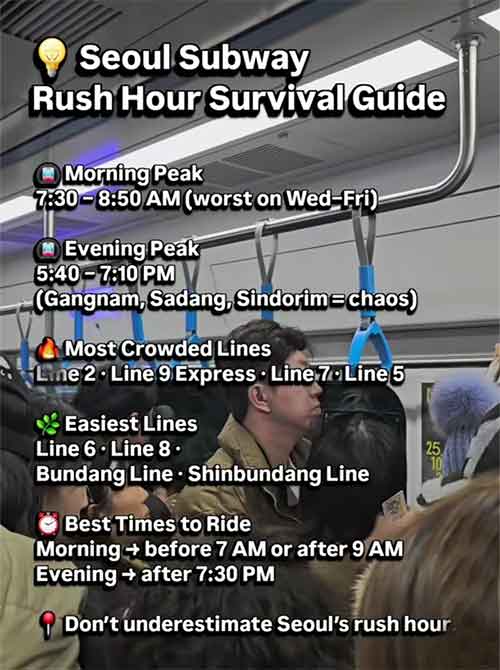
Subways are a convenient way to get around in Korea cities or even between cities. Most cities operate subway systems with signs in Korean and English. The subway in the Seoul metropolitan area is run by the Seoul Subway System with lines connecting to to locations north and south of the city. Traditionally you would think of a subway as inner-city transportation, but the subways in Korea are almost like trains, because they go many places.
As an example, it is very common for passengers to take the subway between Seoul and Songtan (Osan AB) or Seoul to Camp Casey. Lines connected to it from outside the city are controlled by Korean National Railroad. There are now 14 or 15 subway lines in or around Seoul, depending on how you count. There are blue lines, green lines, yellow lines, orange lines and a mixture of color lines, each with a line number.
SUBWAYS - Korea Tourism Organization

https://www.korail.com/global/eng/main
Korail is the national railway operator in South Korea, which is a public corporation that operates trains in South Korea. Korail operates commuter, intercity, regional, and freight trains, and also also the KTX high-speed trains, which include the KTX and KTX-Sancheon lines of ITX-Saemaeul, Saemaeul, Mugunghwa-ho, and High-speed KTX. KTX has a app, KorailTalk, for download to make reservations and purchase tickets.

https://etk.srail.kr/hpg/hra/fr/01/selectScheduleList.do
SRT is a Korean high-speed rail service operated by the SR Corporation, a private company. SRT only offers a high speed train service. Unfortunately, you can’t reserve a ticket without a credit card from a Korean bank. You can make a reservation at the train station through an agency, or ask a Korean for help. You can check the schedule and route of SRT on their website
Reference: Getting Around By Train

https://www.arex.or.kr/main.do
The AREX is a quick train ride from Incheon Airport to Seoul Station. From Incheon Airport to Seoul: The Airport Railroad Express (AREX) operates two trains: the Express Train, running from Incheon International Airport Terminal 1 and Terminal 2 directly to Seoul Station; and the All Stop Train that stops by 14 subway stations along the way from Incheon International Airport Terminal 2 to Seoul Station.
The fare is comparable to the cost of riding the bus, and much cheaper than taking a taxi. Incheon to Seoul should be just about 9,500 won (child 7,500 won), which is just around $7.98 and takes around 45 minutes on the express train. From Gimpo Airport to Seoul Station, the all-stop ride is a short 22 minutes and costs about 1,550 won, or around $1.30.
Another convenient way to get around in Korean cities and around the country. Both express and intercity buses have extensive networks throughout the country, providing transportation from one city to another at reasonable prices.
Seoul City Buses
Express & Intercity Buses
Bus zones, numbers, stops, fares
The previously well-known New Kyong Dong bus (old Myong Jin) bus service that we paid $6-7 per ticket for permanently ended at the beginning of the covid pandemic in Feb 2020. To compensate, the Eight Army's 25th Transportation contracted out a government run bus service, but on a much more limited schedule than the old New Kyong Dong. Details of schedules are on the USAG Humphreys INTER-GARRISON BUS SERVICE website at https://home.army.mil/humphreys/my-usag-humphreys/inter-garrison-bus-service.
Runs from the LTG Timothy J. Maude Hall One-stop to Incheon Terminal 1 and Terminal 2.
Details at https://home.army.mil/humphreys/my-usag-humphreys/inter-garrison-bus-service
Osan AB runs a shuttle bus between Osan and the Incheon Airport, as well as a bus between Osan AB and Kunsan AB.
Details on the 51 FSS website at https://www.51fss.com/information-tickets-travel/
Unfortunately, there is no longer a shuttle bus between the Dragon Hill Lodge and the airports. Using the base Taxi service (see AAFES Taxi below) from the DHL is the only mode to the airports and costs around $80 give or take. You can use the AAFES app to also arrange for a pickup at the airport to bring you to the DHL on Yongsan.
A taxi is very common form of transport in Korea. There are two types of taxi services in Korea: On-base taxi services operated by, or contracted with, AAFES, and the Off-base (local) commercial Korean taxi's.

Each military installation has a base taxi service operated by the Exchange, and also contracted commercial (downtown) taxi's who are allowed to operate on-base. These taxi's will deliver you where ever you wish to go on or off base to include the Incheon airport if you wish.
AAFES Taxi App: There is an AAFES TAXI app you can download called Exchange Taxi Plus (This PLUS replaces the outdated Exchange Taxi app) to your phone to order a taxi for pickup from anywhere on-base, and within their range of operations off-base.
You can also call 1544-9080 from your Korea cell phone for the same service, although the app is the most efficient way. As mentioned, you can order a taxi pickup off-base, but, what these base taxi's will not do (are not allowed to do) is to pick you up if you 'wave' them down while off base.
Or you can Email:
Email: taxi@usfktaxi.com
Subject: PICK-UP FROM INCHEON AIRPORT [your name]
Email Body:
Name:
Contact Number:
Number of Passengers:
Number of Luggage & Size:
Pick-Update:
Pick-Up Time:
Pick-Up Point Airport Location:
Flight Number / ETA:
Drop-Off Location:
Number of Passengers:
Korea has standard (often orange, silver, or white) and deluxe (black) taxis, plus special international taxis driven by multilingual drivers. You can hail taxis on the street or book them through apps like Kakao T or the K-RIDE app. International taxis are a good option for tourists, as they can be booked at airports or online and provide customized services.
The off-base local Korean taxi's are not allowed on-base. If you take one from downtown, they will bring you to the base gate you ask for (if they understand you) where you must get out, enter the base and continue your travel another way. Many of the local drivers speak some English, or at least enough to get you to and from well-known locations. However, it would be wise to look for taxis with a “translation services available” sticker on the side.
There are several types of local taxis in Korea
Rates vary based on type of taxi and/or the time elapsed from the trip. Tipping the driver is not normally expected in Korea. It is also customary to not expect small change after paying. On the other hand, drivers who often work around military bases are more likely to expect a small gratuity.
Uber operates a "Uber Taxi" service in South Korea, which allows users to request licensed, local taxis through the app, similar to other cities.
While the Uber app is available, local ride-hailing services like Kakao T are also widely used and are sometimes considered a primary alternative.
You will want a car to get around most US military installations in Korea. The Humphreys exchange-commissary complex is three miles from the walk-in gate. Osan AB is similar. Go to the Driving in Korea page (link below) to learn more about driving and navigational assistance.
Visit our Driving in Korea page
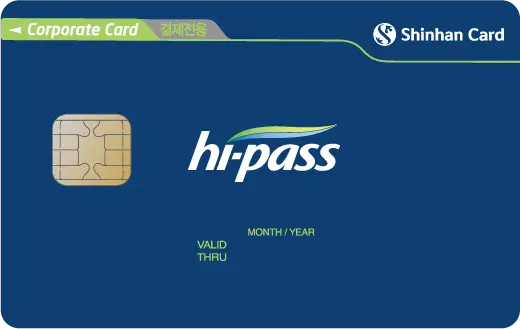
Highway tolls can be paid using credit cards, cash, or a Hi-Pass card in Korea. The handy Hi-Pass system allows you to pay tolls without having to stop at every toll gate.
This collection system uses an On Board Unit (OBU) placed at the front part of the vehicle (normally on the car dash board or around rear-view mirror), and requires a Hi-Pass Card that is inserted into the OBU. Most vehicles today purchased in Korea have an ETC unit (Electronic Toll Collection) built into the rear-view mirror, which eliminates the need for an OBU. You can purchase a Hi-Pass card from any convenience store selling OBU such as GS25, CU, 7/11 and others. You can recharge the currency amount on the card at these same places.
You can also purchase a prepaid Standard Hi-Pass card, that is only available to pay tolls, or get a Hi-Pass Plus credit card that is linked to Hi-Pass service. Both cards are available at rest stops on highways or on Camp Humphreys (Bldg. 449). The Standard Hi-Pass card can be recharged at the same convenience stores that sells them. The Hi-Pass Plus card can be topped up (recharged) in advance at any bank or major highway rest area. Highway rest areas often have small machine kiosks where you can check your remaining balance and top up your Hi-Pass Plus card.
The other way to use a Hi-Pass card is to use it independently, by itself, without an OBU and use it on the automatic RFID readers in the non Hi-Pass lanes. Just hold the card against the reader and off you go. You of course must stop to do this, but in todays "everyone has a Hi-Pass" OBU, these lanes are almost always empty and your stop is but seconds.
A Standard Hi-Pass card is a pay-as-you-go card, but can also be connected to your bank account; you will receive a bill every month for any tolls you used. The cost for a bank-connected Hi-Pass card is a small fee you pay yearly, usually around 5,000 won. Some banks are easier to connect to the Hi-Pass card than others, and some banks do not allow foreign nationals to connect their cards. You can check with your bank, or use the Hi-Pass helpline (Korean) for more information.
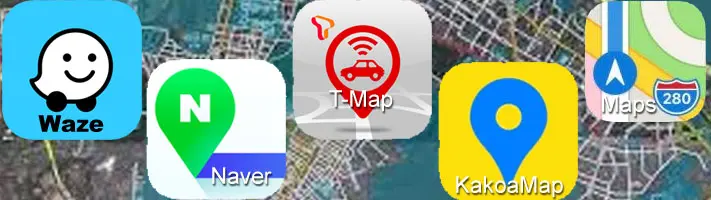
There are some common smart phone navigator apps in Korea, but Waze is a popular one for expats due to it mapping on-base locations. It is a smart phone app with all the same type of bells and whistles most NAV Apps have like multiple languages, audio voice and alarm warnings, speed cameras warnings, speed limit and speed trap displays and warnings, allows you to send traffic jam and road construction warnings up for all to see etc. But what makes Waze stand out from the others is its complete mapping of all military installations in Korea. You want to know where building 4305 is on Yongsan? Waze will show you! Free download.
T-Map and Naver are common Korean smart phone apps, although not English friendly and do not map military installations. Both have better pictures and graphics than Waze and some like this better than Waze if they speak Korean. It is one of those "try them yourself" and see what you like.
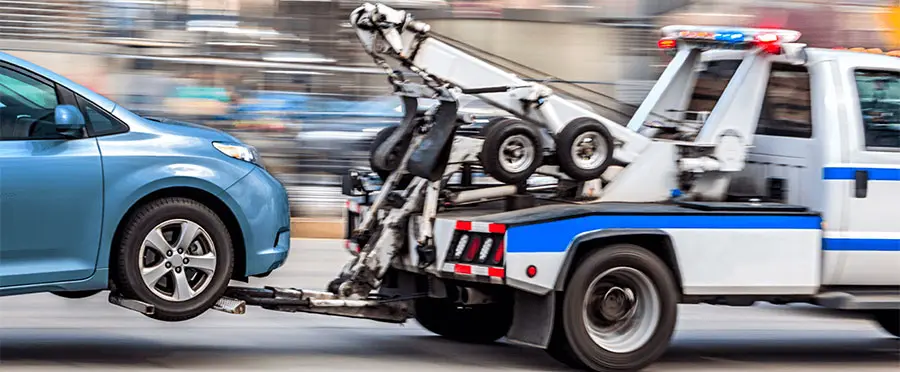
You will see them everywhere, sitting on the sides of roads and highways, waiting for that "call" or listening to their scanners. And then you will see them flying down the road, lights on, loud exhaust sounds, heading to a destination they may, or may not, have been called to. First come first serve is the name of their game.
Do not allow an independently-owned (or any) Tow Truck to hook-up and move your vehicle, without first notifying your insurance company! Liabilities and payments can be tricky when dealing with local tow trucks. Always coordinate with your insurance company prior to using tow services. Most insurance companies have a Roadside Service call number.
Some Insurance Company's may not pay towing charges without notification first. And when there is any damage to the vehicle involved... wow, liability issues can arise easily, which makes payment issues that much harder.