

In 2001 Congress rolled out TRICARE For Life (TFL) a Medicare wraparound program designed to ease the financial burden of out-of-pocket costs associated with Medicare (in the US), and to keep TRICARE alive for retirees after 65. This was important, because Congress initially wanted to stop TRICARE altogether once you hit 65. This TFL plan was the alternative.
To keep TRICARE after age 65 you must have Medicare Part A and Part B properly annotated in your DEERS record. You must enroll in Medicare Part B, which automatically comes with Part A at no extra cost.
Medicare is not available to use overseas, however you must still enroll in order to keep TRICARE and transition to TFL. If you are like most retirees, TRICARE is something you don't want to lose, so Medicare Part A and B enrollment is crucial.
While overseas TFL is the first payer of medical bills at 75%. You pay the remaining 25% out-of-pocket up to the Catastrophic cap. Once that annual Cap is hit, TRICARE pays 100% for the remainder of that calendar year. The rules change however, if you have Other Health Insurance (OHI), so read about the impact of OHI https://tricare.mil/Plans/OHI
Most people get their Medicare Part B (Medical Insurance) premium deducted automatically from their Social Security benefit payment. If you don't get benefits from Social Security, you'll get a premium bill from Medicare, or you can choose one of the 4 ways to pay. Go to https://www.medicare.gov/basics/costs/pay-premiums to learn all about payments.
A military retiree becomes eligible for Tricare for Life (TFL) either for turning 65 years old or for collecting Social Security Disability (SSDI). A retiree gets TFL by enrolling in both Medicare Part A and Part B, which triggers TFL coverage automatically. To avoid gaps in coverage, it is crucial to enroll in Medicare Part A & B at the very least three months before turning 65, preferably three - six months before, through the Social Security Administration (SSA). Here's more:
You must enroll in Medicare in order to keep TRICARE, period! To sign up for Medicare Part A & B, click the button below to go to the SSA website and under Sign up for Medicare select Apply For Myself.
In order to transition from TRICARE Select to TRICARE For Life (TFL) at age 65 you MUST still enroll in Medicare. Read about TRICARE For Life on our TRICARE Plans & Programs page. Since Medicare coverage and use does not apply to retirees in Korea we will not discuss details about Medicare plans and coverage. To learn more about Medicare go to https://www.medicare.gov The key thing to know is that if you want to keep TRICARE you must enroll in Medicare at 65. Read more about TRICARE For Life
In the restructuring of TRICARE in 2001, several years after CHAMPUS changed to TRICARE, the governments idea was for TRICARE to end at age 65, and dump everyone into Medicare. There was a great out cry from veterans groups about this, especially since Medicare cannot be used overseas. So, TRICARE For Life (TFL) was invented as a Medicare wrap-around compromise sponsored by Medicare. Part of this compromise meant enrollees (retirees) would have continuing TRICARE coverage, but would have to pay for Medicare Part B.
TFL is secondary to Medicare! Medicare automatically forwards the claim to the TFL claims processor. The provider does not direct bill Tricare. Payment is sent to the provider by default.
A retirees INDEF ID card, and that of the dependent spouse, when turning 65 does not rely on whether you are enrolled in Medicare! You will receive an INDEF DEERS ID card at 65 whether you are enrolled or not. AND don't forget, you must get a new ID card at 65 because your old one expires on the last day of the month prior to your birth month, even if the old blue one says INDEF (read more about INDEF).
New as of June 2026, retiree dependent spouses also get INDEF status when turning 65 regardless of Medicare enrollment. Read more on our DEERS ID Card page.
It is common during discussions about TFL and Medicare to refer to the Medicare requirement as needing Medicare Part B, which is true. But, Part A is also required in order to be TRICARE For Life eligible. You do not however, "enroll" in Part A, because it comes free when you enroll in Part B. So, enrolling in Medicare Part B does in fact give you both Part A and Part B.
Why is this important to know? Because your DEERS record MUST correctly reflect both Parts A and B to make you TRICARE eligible. The Medicare process automatically updates your DEERS record once you enroll in Medicare Part B with both Parts A and B. It however, is not 100% foolproof. DEERS ID card operators will confirm there are times when Part A will be incorrectly annotated requiring DMDC to do some data changes. It does not happen often, but it does happen. Something to keep in mind during any troubleshooting with a TRICARE problem you may run into.
The question comes up often whether Medicare Advantage is a good option, usually by those trying to get out of paying the Medicare Part B premium. Medicare Advantage Plans are offered by private companies approved by Medicare, and basically include Medicare Parts A and B together. Medicare Advantage is not a substitute for initial Part B enrollment. It is also not a viable option when living overseas, because one of the stipulations of having it is you must live within the region of the plan (CONUS). So bottom line is, for retirees living in Korea Medicare Advantage is not an option.
Medicare IS NOT OHI, Other Health Insurance. Sometimes TRICARE records get flagged showing Medicare as OHI, which is an error. This is an incorrect clerical annotation in the TRICARE record. If you have TRICARE For Life and are ever told by a network hospital, or provider that your record shows Medicare Part A & B as OHI, they will not bill TRICARE, and will probably bill you until it gets resolved.
Call TRICARE Claims Processing at 080-429-0880 and have them correct this by either changing the question in your TRICARE record about "OHI?" from YES to NO, deleting that from the record altogether, or coding it with something else that is not OHI.
Inexperienced Claims Processors on the line with you at TRICARE may or may not know about this. The experienced folks do, so if you get the run-around and the "it should be good" responses, ask for a supervisor.

Overview of the TRICARE For Life program. Describes how Medicare and TRICARE work together, provider options, costs, claims, and more. TRICARE Publications https://tricare.mil/Publications/Handbooks/tricare_for_life
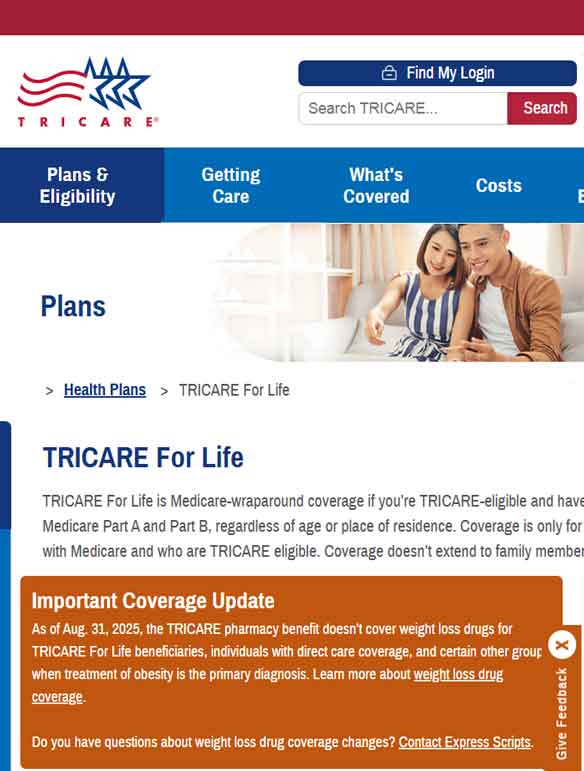
Explains TRICARE For Life being Medicare-wraparound coverage for retirees and their family members, coverage provided and who are TRICARE eligible. DEERS must be updated. Read more on the TRICARE website https://tricare.mil/tfl
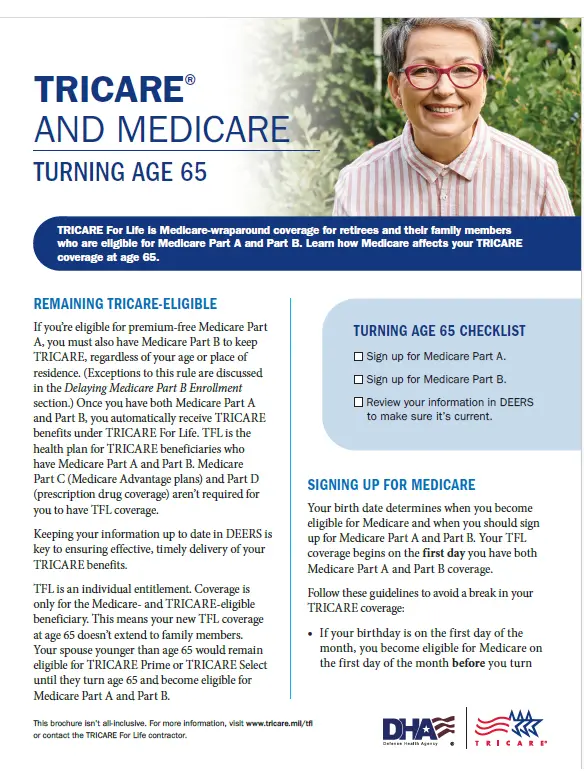
Overview of the TRICARE For Life program, Medicare and turning 65. Discusses a Turning 65 Checklist, Delayed Medicare enrollment, and more. Read more here...
This is a common question by many, because we do not have Medicare coverage overseas. It is a personal choice each of us must make based on our situation. Some elect NOT to enroll in Medicare, choosing not to pay for something they can't use (although in reality it is indirectly in-use), and instead elect to purchase Korean Health Insurance. This leads to losing TRICARE completely, which might be fine if you never, ever leave Korea, but as soon as you go to the US or any other country, you are no longer covered for health care. Here are some things you need to consider if you are contemplating this:
Soooooo, I for one, a retiree living in Korea over the age of 65, am a firm believer in keeping my TRICARE intact and paying for Medicare. But, to each their own.
YES, but, FEHB is considered Other Health Insurance (OHI) to TRICARE. If you have both FEHB and TRICARE, FEHB will be the primary payer, and TRICARE will pay after FEHB, as TRICARE is the secondary payer. If you were still working for the federal government you could defer Medicare without penalty, unless you are a Civil Service Retiree. As a retiree the option to defer is not available, so enrolling in Medicare is how you keep TFL.
Yes, enrollment into Medicare can be deferred under certain conditions and reinstated after age 65 without penalties. However, it is important to know that you lose TRICARE after age 65 if not enrolled in Medicare Part B, period. There is no way around that. So:
- Can you defer Medicare? Yes
- Can you enroll at a later time without penalty? Yes
- Do I lose TRICARE during deferment period? Yes
- Will TFL start once enrolled in Medicare after deferment? Yes
A foreign spouse of a retiree is eligible for Medicare and TRICARE For Life based on retiree spouse status!
Toss all these facts into a blender and what comes out is, foreign spouses are eligible for TFL by virtue of their retired spouse's eligibility.
What all this means is that foreign spouses at age 65 can usually enroll in and start paying for Medicare based on sponsors eligibility, if the retiree is at the qualifying age of 62. There are some additional rules if the retiree is younger then the spouse and not yet 62. They do not get Medicare! They have only TFL! But the fact is, based on their military retirees eligibility, foreign spouses are eligible to retain TRICARE and transition to TFL at 65 even if they are foreign citizens, don't have a Social Security Number or never lived in the U.S.
My spouse turns 65 before I turn 62 to reach my Social Security eligible age, and my spouse does not qualify for Medicare Part B on her own. Does she lose TRICARE?
No! The spouse will remain on TRICARE Select until the retiree turns 62, at which time the spouse becomes Medicare eligible under the retirees work history. Apply for the spouses Medicare enrollment. When Medicare Parts A and B are issued, DEERS will update (or the VO can manually update it), and TFL will begin.
Lets use an example to answer this. My spouse is only eligible for Medicare based on my retiree eligibility. She just turned 65, but I am only 60, so my spouse cannot enroll in Medicare Part B for 2 more years. If the spouse attempts to enroll in Medicare they will receive a Rejection Letter, because the ineligibility. Visit a DEERS ID card office and the ID operator will update the spouses DEERS record to reflect Not Eligible for Medicare Part A Under Sponsor. This will reflect in the DEERS record as TRICARE (it still reads as the old CHAMPUS in DEERS, but it is TRICARE) as Eligible INDEF, which allows the spouse to remain on current TRICARE Select until a later date.
When attempting to use your Medicare and TFL when traveling back to the U.S., it is understood that you need to show your Medicare Card and Retiree ID Card to the provider. We have heard that there are some providers in the U.S. that do not accept Medicare or TFL, but we really cannot confirm that to be true, or if it is, very widespread.
Yes, enrollment into Medicare can be deferred under certain conditions and reinstated after age 65 without penalties. However, it is important to know that you lose TRICARE after age 65 if not enrolled in Medicare Part B, period. There is no way around that. So:
- Can you defer Medicare? Yes
- Can you enroll at a later time without penalty? Yes
- Do I lose TRICARE during deferment period? Yes
- Will TFL start once enrolled in Medicare after deferment? Yes
A foreign spouse of a retiree is eligible for Medicare and TRICARE For Life based on retiree spouse status!
Toss all these facts into a blender and what comes out is, foreign spouses are eligible for TFL by virtue of their retired spouse's eligibility. All military retirees are eligible for Medicare, even if they are not using it yet. They can actually be eligible as young as the age of 38, with benefits not starting until age 65.
What all this means is that foreign spouses at age 65 can usually enroll in and start paying for Medicare based on sponsors eligibility. There are some additional rules if the retiree is younger then the spouse. They do not get Medicare! They have only TFL! But the fact is, based on their military retirees eligibility, foreign spouses are eligible to retain TRICARE and transition to TFL at 65 even if they are foreign citizens, don't have a Social Security Number or never lived in the U.S.
My spouse turns 65 before I turn 62 to reach my Social Security eligible age, and my spouse does not qualify for Medicare Part B on her own. Does she lose TRICARE?
No! The spouse will remain on TRICARE Select until the retiree turns 62, at which time the spouse becomes Medicare eligible under the retirees work history. Apply for the spouses Medicare enrollment. When Medicare Parts A and B are issued, DEERS will update (or the VO can manually update it), and TFL will begin.
Lets use an example to answer this. My spouse is only eligible for Medicare based on my retiree eligibility. She just turned 65, but I am only 60, so my spouse cannot enroll in Medicare Part B for 2 more years. If the spouse attempts to enroll in Medicare they will receive a Rejection Letter, because the ineligibility. Visit a DEERS ID card office and the ID operator will update the spouses DEERS record to reflect Not Eligible for Medicare Part A Under Sponsor. This will reflect in the DEERS record as TRICARE (it still reads as the old CHAMPUS in DEERS, but it is TRICARE) as Eligible INDEF, which allows the spouse to remain on current TRICARE Select until a later date.
When attempting to use your Medicare and TFL when traveling back to the U.S., it is understood that you need to show your Medicare Card and Retiree ID Card to the provider. We have heard that there are some providers in the U.S. that do not accept Medicare or TFL, but we really cannot confirm that to be true, or if it is, very widespread.